
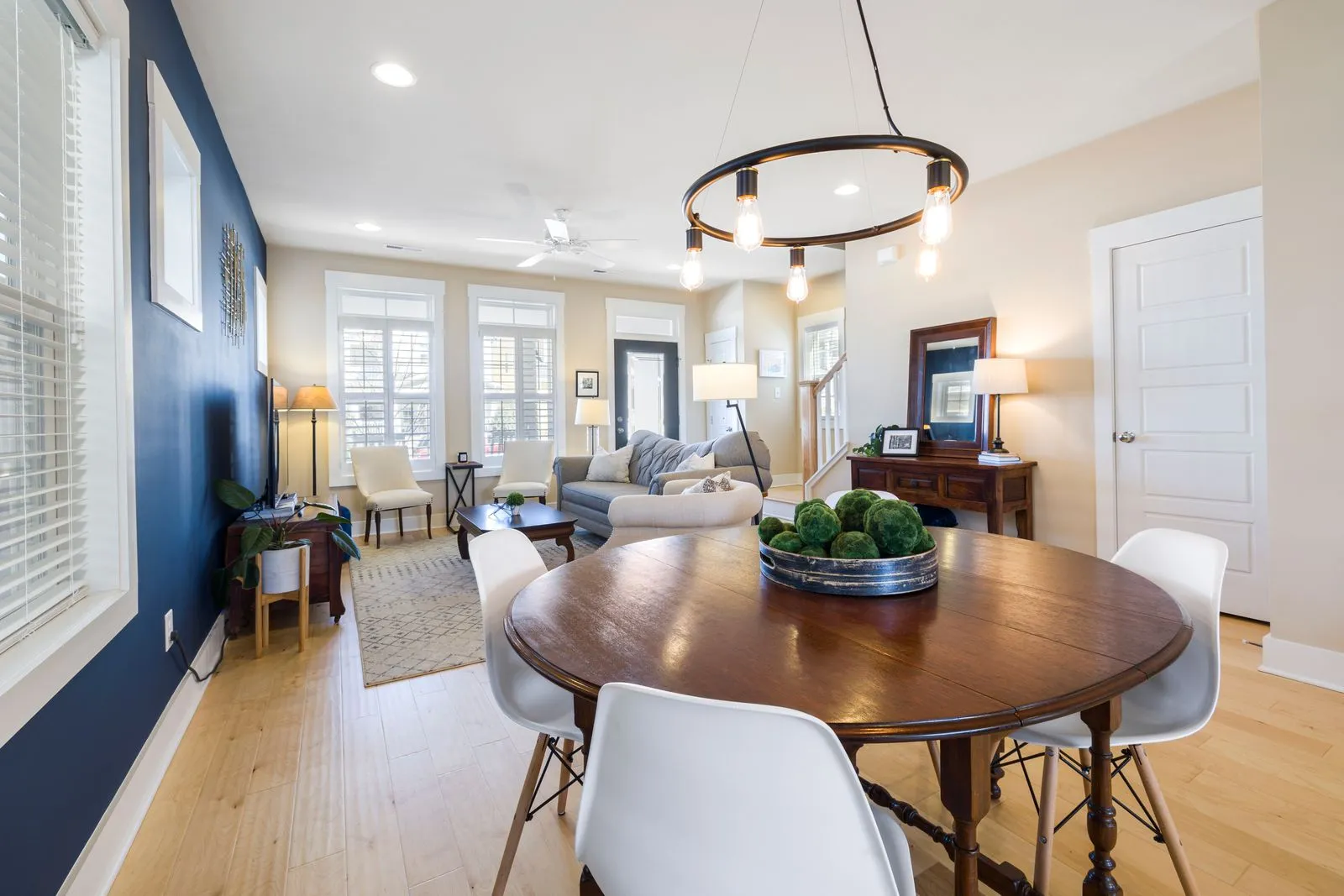
In a condo, every furnishing competes for limited space. A dining table can clarify how an open area works, while an extra chair may narrow the path through it. The goal is not to empty your home or disguise its use. Keep pieces that show a room’s purpose and make it comfortable to move through. Relocate or store items that crowd the layout, distract from useful features, or make rooms harder to understand.
Start With Each Room’s Purpose
Walk through the condo and name the primary purpose of each space. A bedroom should read as a place to sleep, a dining area should suggest a place to eat, and a living room should support conversation or relaxation. Keep the main furniture that makes that purpose clear, such as a bed, dining table, or sofa. If a room serves more than one function, show the most useful one first.
Look at the room from the doorway, then follow the route someone would take through it. If furniture blocks a natural path or makes a door, closet, or window awkward to reach, try moving it before removing it altogether. The best layout lets a visitor understand the room quickly and walk through without weaving around furniture.
Keep Pieces That Help
Keep furnishings that fit the room, serve a clear purpose, and leave enough open space around them. A correctly sized sofa can define a living area without closing it off. A bed with a simple bedside table can show how the bedroom functions. In a small dining nook, a modest table may communicate the space’s use better than leaving it empty.
Useful does not always mean necessary for staging. Ask whether each item helps someone see the room’s size, use, or best feature. A lamp can make a dim corner feel usable; several small tables may only add visual clutter. Keep a few coordinated accessories, but clear personal collections and everyday items from surfaces so the furniture and layout remain the focus.
Move or Store the Extras
Move an item to another room if it fits better there and does not create a new problem. For example, a spare chair may work at a desk, but only if the desk area still feels open. Avoid shifting clutter from one room to another. If a piece has no clear role in the condo’s layout, take it out of the home during showings.
Store oversized, duplicate, damaged, or highly personal furnishings and belongings. Common candidates include an extra armchair, bulky shelving, hobby equipment, and boxes that reduce usable floor area. Clear countertops, entryways, and closet floors as well. Buyers often look at storage, so packed closets can make the condo seem short on space even when the rooms are tidy.
Check the Layout Before Listing
After editing the furnishings, take photos from the entrance to each room. Check whether the room’s purpose is obvious, whether paths look clear, and whether windows and built-in features remain visible. If a room looks cramped in a photo, remove one more small piece or reposition the largest item. Keep enough seating and practical furniture for the home to feel livable.
Ask someone who does not live in the condo to walk through without explanation. Notice where they pause, what they mistake for storage, and whether they can reach doors and windows easily. Their observations can reveal furniture that feels normal to you but makes the layout harder to read.
For each furnishing, decide whether it supports the room’s purpose, fits the available space, and keeps movement easy. Keep the pieces that answer yes; move or store those that do not. A thoughtful edit can help buyers understand the condo without making it feel empty. If you want a practical second opinion, Galway Condo Staging can help assess the layout.